The Work Behind a Seasonal Harvest
The work behind a seasonal harvest changes with crop, weather and crew. Learn how timing and shared tasks shape the pace, and where help fits.
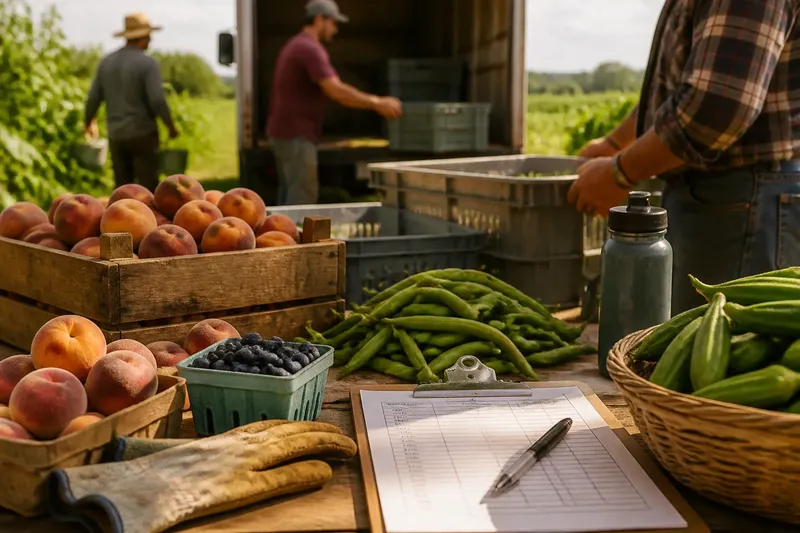
The work behind a seasonal harvest is easiest to see when a field, packing shed or orchard suddenly needs more hands than it did last week. The change is not simply a matter of hiring extra workers. Crops reach readiness on different schedules, tasks shift as conditions change, and a crew’s work has to connect from one stage to the next.
That makes harvest a useful subject for anyone deciding where seasonal labor fits: on a farm, in a packing operation, at a farmers market or in a community effort. The right arrangement depends on what is being handled, how quickly it must move and what skills the work requires. No one crop or Southern place sets a rule for all the others.
What kind of harvest work are you trying to cover?
Start with the work, not the label “harvest.” Picking, sorting, washing, grading, packing and moving produce may happen close together, but they call for different abilities and working conditions. Some crops can be gathered over a period of time. Others need attention in a narrow window, with the next task ready before the first one is finished.
For a small grower, the immediate problem might be a morning’s picking. For a larger operation, it could be keeping a line of bins moving through a shed while maintaining a separate crew for field work. A market vendor may need help with preparation and loading rather than harvesting itself. Each situation has a different bottleneck, and adding labor somewhere else can leave the actual pinch untouched.
Write down the tasks that must happen, in order. Note which ones depend on weather, daylight, crop condition or equipment availability. Then ask which task is slowing the rest. This modest inventory is more useful than a general estimate of how many people “harvest season” requires.
When is a short, concentrated crew the better fit?
Use a concentrated crew when the crop is ready over a brief interval and the work can be divided into clear, repeatable tasks. The pressure may come from ripeness, a forecast, an order waiting to be filled or a delivery schedule. In these cases, the central job is coordinating people so that picking, containers, transport and handling remain in step.
A temporary crew can suit work such as gathering fruit for immediate packing or bringing a field crop in before conditions change. It works best when someone can explain the task, demonstrate the expected handling and answer questions without leaving the operation unattended. New workers need to know where to put full containers, how to keep lots separate and whom to ask when something does not look right.
The tradeoff is that a short-term crew may arrive with little shared knowledge of the site. Instructions that seem obvious to a regular worker—where a path ends, which crate is for which crop, or when a full bin is ready to move—may be invisible to someone on a first shift. Clear signs, a visible lead worker and a simple route for questions reduce avoidable pauses.
Do not treat speed as the only measure of a good harvest shift. Rough handling can damage produce, and a rushed handoff can create confusion later in the chain. The useful pace is the one the field and the next work station can absorb.
When does a returning or cross-trained crew make more sense?
A returning crew is a better fit when work depends on familiarity with the crop, equipment or the operation’s routines. Some tasks involve judgment rather than a single repeated motion: selecting produce at the right stage, noticing damage, keeping a picking pattern orderly or adjusting to a change in field conditions. Experience can help workers make those decisions consistently.
Cross-training also helps when the harvest moves through several kinds of work. Someone who understands both picking and packing can recognize why a careless field handoff creates extra sorting later. A worker who can shift between tasks may help cover an unexpected gap, provided the new assignment is appropriate and the person has been shown how to do it.
This arrangement takes time to build. Returning workers need a reason to come back, and training requires attention before the busiest stretch arrives. A farm or business may not be able to offer continuous work between harvests. In that case, honest scheduling and clear communication are more useful than promises the season cannot support.
For an operation with changing tasks, cross-training can be especially helpful if the handoffs are planned. It is not a substitute for enough people in a demanding task, nor does familiarity make every job interchangeable. The lead worker still needs to assign work according to ability and current conditions.
How should the work be divided across the harvest?
Think of the harvest as a chain of connected tasks rather than a single event. One worker or group may cut or pick; another may sort and pack; someone else may move supplies, record quantities or arrange delivery. The exact arrangement varies, but each handoff needs a clear destination and a person responsible for keeping work moving.
For a small operation, the same person may handle several links in that chain. That can make communication direct, but it also means one interruption can affect multiple tasks. Larger operations may separate roles, which can improve focus but create more points where produce, instructions or information must pass between people.
Before the busy period, identify where full containers go, who checks them and how the next group knows they are ready. Decide how workers will flag a shortage of empty bins or a delay in transport. Keep the method plain enough to work when the field is noisy and everyone has a task in hand.
Imagine a grower whose produce is being picked faster than a small packing area can sort it. The grower could add pickers, but that would enlarge the pile waiting at the shed. A more fitting response would be to assign help to sorting and keep the field crew at a pace the packing area can manage; the observable result should be a steadier flow and less produce waiting in one place.
What should you arrange before workers arrive?
Preparation does not mean predicting every change. It means resolving ordinary questions before they consume attention during a crowded shift. A short briefing can cover the task, work area, supervisor, breaks, supplies and what to do when conditions change.
- Task and quality: Show what is being gathered or handled and what should be set aside. Give a practical example of acceptable condition rather than relying on an unclear phrase such as “pick the good ones.”
- Work area: Point out the field rows, shed stations, paths, wash areas and places that are off limits. Make the route for moving full containers easy to understand.
- Tools and materials: Identify the containers, gloves, clippers or other supplies workers are expected to use. Explain how to report equipment that is missing or unsuitable.
- Supervision: Name the person who can answer questions and who makes changes to assignments. A crew should not have to guess which instruction takes priority.
- Timing and communication: Explain the expected start, pauses, end of shift and how updates will be shared if weather or crop conditions alter the plan.
- Pay and records: Make the agreed pay arrangement and timekeeping method clear before work begins. Keep records through the operation’s normal process.
- Local requirements: Check applicable labor rules, work authorization requirements and any instructions for tools or handling. Requirements vary by location and work, so consult the relevant agency or a qualified professional if their application is unclear.
The list is not a substitute for supervision. It gives a crew a common starting point, so the person overseeing work can spend more time responding to the actual harvest and less time answering the same basic question from several corners of the field.
What questions come up when planning seasonal harvest labor?
How far ahead should a crew be arranged?
Begin planning when the likely harvest window and task needs become clear, then keep workers updated as conditions change. Some jobs can be scheduled with confidence; others depend on weather and crop readiness, so communicate what remains uncertain.
Can volunteers take part in a harvest?
Volunteers may fit community, educational or charitable work when the purpose, supervision and tasks are appropriate. Do not assume that calling a shift voluntary resolves employment or safety obligations; check the rules that apply to the organization and activity.
Should every worker receive the same task?
No. A shared briefing can establish common expectations, but assignments should reflect the task, a worker’s demonstrated ability and the needs of the operation. Keep a clear way to ask for help or request a task change.
What if weather changes the plan?
Set out who will make the call and how workers will hear about it. A revised plan may mean pausing, changing tasks or rescheduling; explain the decision promptly rather than leaving people to infer it from an empty field.
How can you tell whether the arrangement fits?
Look for practical signs during the shift. Are people waiting for containers or instructions? Is produce collecting faster than it can be handled? Are workers repeating a task because its standard was unclear? These observations point to a specific mismatch, such as a slow handoff, a missing supply or an assignment that needs better explanation.
At the end of the work period, ask the crew lead what interrupted the flow and which task absorbed more time than expected. Record only what will help plan the next shift: a supply that ran short, an instruction that confused new workers, or a stage that needed another person. Avoid turning one day’s conditions into a rule for the next crop or season.
The work behind a seasonal harvest is shaped by timing, skill and coordination, but the right labor plan remains local to the crop and the people doing it. Match help to the task that is actually constrained, make each handoff visible and revise the arrangement as conditions change. That gives seasonal workers a clearer day and gives the harvest a better chance of moving at a pace the rest of the operation can handle.